This article provides essential information about lab-grown meat. You’ll discover what it is, how it’s produced, the primary pros and cons of cultured meat, whether it’s available for purchase, and if so, where you can find these points of sale for lab-grown meat?
There are many other questions in the text below. For more in-depth details, you can find additional information on our website, which is entirely dedicated to meat grown in a lab.
🥓 What is lab-grown meat?
To start, let’s establish some definitions of lab-grown meat to provide clarity on the subject.
Cultured meat refers to a product of animal origin cultivated outside the animal’s body. It goes by various names such as laboratory meat, synthetic meat, In vitro meat, cell-derived meat, bioengineered meat, and more.
The discussion around artificial meat is expanding, not only within family kitchen conversations but also in publications. Each year, there is a growing influx of news on this topic, with people showing increasing interest, actively seeking where to purchase it, and exploring the countries where it is permitted.
If we refer to Wikipedia, we find the following definition:
“It is a form of cellular agriculture where meat is produced by culturing animal cells in vitro. Cultured meat is produced using tissue engineering techniques pioneered in regenerative medicine.”
In reality, lab-grown meat production involves some level of animal participation, so there’s only partial truth in these words. Another source provides a definition that aligns more closely with reality:
“Cultured meat, sometimes called lab-grown, clean, or cultivated meat, is grown in a lab from a few animal cells”.

🧫 How is lab-grown meat produced?
The process of crafting laboratory pork or chicken is intricate. Despite a decades of development, experimentation, and improvement, it remains a complex and expensive endeavor.
In this article, we’ll briefly delve into the primary stages of synthetic meat sample production, saving a detailed exploration of this complex process for a separate text.
In simple terms, cultivating slaughter-free meat is grounded in an ancient and well-established fermentation technology—an analogy to beer production. However, in this case, the focus is on the industrial cultivation of cells.
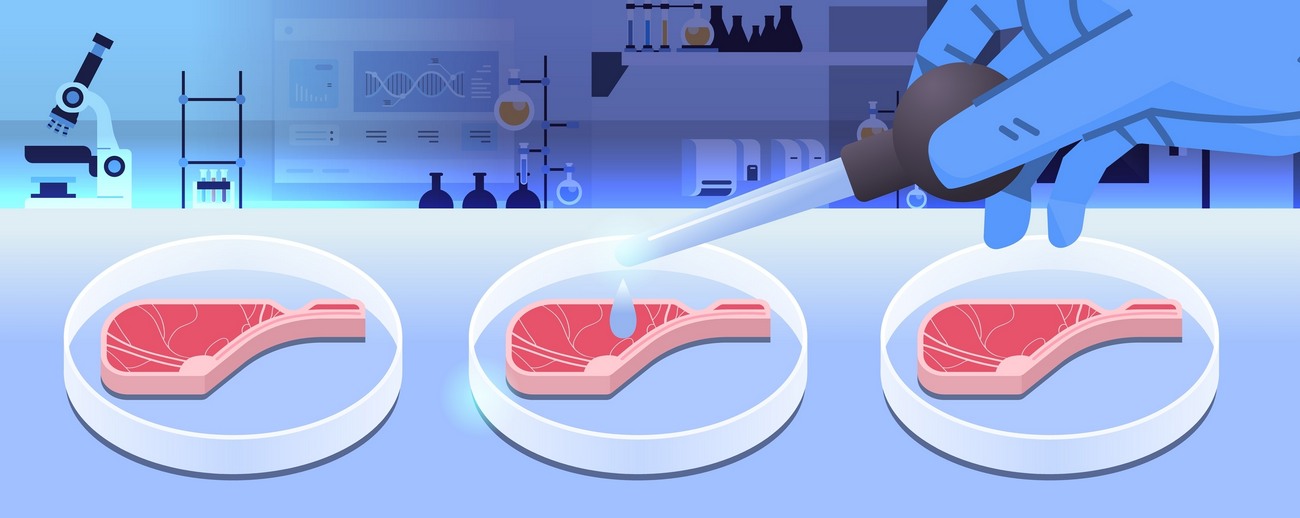
- First and foremost, for bioengineered cultivation in laboratory conditions, samples of animal material are required. A portion of the body, for example, from a cow (a painless procedure), is taken, along with a certain number of cells. They will serve as the foundation for subsequent reproduction.
- Placing this sample in special conditions that promote the effective reproduction and growth of protein cells is the next step. This typically occurs in a laboratory or a space specifically equipped for cultivating cultured meat. Cleanliness, sterility, and meticulous control over all indicators—temperature, humidity, and pressure—are crucial.
- Maintaining favorable conditions for the reproduction of protein cells involves preventing fermentation processes, excluding the appearance of fungal organisms, and so on.
- Monitoring the lab-grown meat cultivation process involves laboratory workers (highly qualified scientists) overseeing the product’s condition and adjusting the surrounding conditions for effective growth.
Quality control of healthy meat involves obtaining the product. Depending on the conditions and production volumes, the final stage encompasses tasting, conducting analyses, recording results, as well as developing improvements to technological processes for further optimization and increased efficiency in growing samples of artificial pork, beef, or chicken.

Pros and cons of cell cultured meat
There have been many discussions on this topic. They were particularly intense at the beginning of the experiments when the majority of the population perceived this technology negatively, lacking information and understanding about how the cultivation would take place, who would be responsible for it, and whether consumers could influence the process, regulate quality, and have free access to all necessary information.
Most of these questions have already been addressed. Over a decade has passed since the start of the initial large-scale research, so now the masses are more reasonably engaging in a dialogue and can already compile for themselves a certain list of pros and cons of lab-grown meat.
😀 Advantages of synthetic meat
Environmental sustainability
The conventional method of raising livestock for slaughter involves enormous water, feed, farm space, human resources, and so on. Laboratory meat production lacks these volumes and scales, which will play a significant role in ecological terms in the future.
Animal welfare
The bioengineered meat cultivation completely eliminates the suffering of livestock. Animal protein (muscles) is grown without involving the actual animal. Only at the beginning of the process is a painless extraction of material (cells) conducted, which does not harm the animal in any way.
Health care
Artificial production of bioengineered meat products hinders the spread of viruses, bacteria, diseases, and parasites transmitted through сommon meat (swine flu, bird flu, zoonotic diseases). The sterility of laboratory conditions enables the creation of perfectly clean meat material in a fully controlled environment.
Food security
The prospect of effectively cultivating lab-grown meat addresses a fundamental issue for humanity – hunger. In the future, access to food products will be even more critical than today. The production technology will continue to improve and eventually meet the growing demand for meat products.
The versatility of the composition, nutrition
A fully controlled environment in the cultivation process allows for more flexible control over the composition of the final product. Сell cultured meat can contain all necessary nutrients for humans and cater to the preferences of specific population groups. In other words, meat can be produced with different components to meet the needs of those who cannot afford to consume conventional animal meat.
Taste and texture
Similarly to the previous point, the process of producing artificial meat can involve stages that shape distinct taste categories. This pertains to both the form of the final product and its consistency.
Cost
In 2023, the cost of laboratory meat production remains high and cannot yet compete with traditional animal farming. However, with each passing year, technology is improving, and production costs are decreasing. Eventually, anyone interested will be able to afford a piece of cell-based pork, chicken, or beef.
If we draw some conclusions, the cultivation of slaughter-free meat addresses key issues in the modern world:
- environmental concerns (livestock breeding harms the environment);
- animal welfare (eliminates the suffering of animals);
- viruses, diseases, parasites (synthesized products are pure and contain nothing but clean protein).
🙁 Disadvantages of artificial meat
Despite the attractiveness and modernity of animal protein and fat cultivation technology on an industrial scale, there are still several significant drawbacks, which we will discuss further:
Price
In 2024, the cost is still too high for average consumers. $17 per serving of cell-based nuggets (in Singapore) is not something that everyone can afford. And this is just one example. Various dishes and options available in restaurant (USA) can cost much more.
Taste, consistency
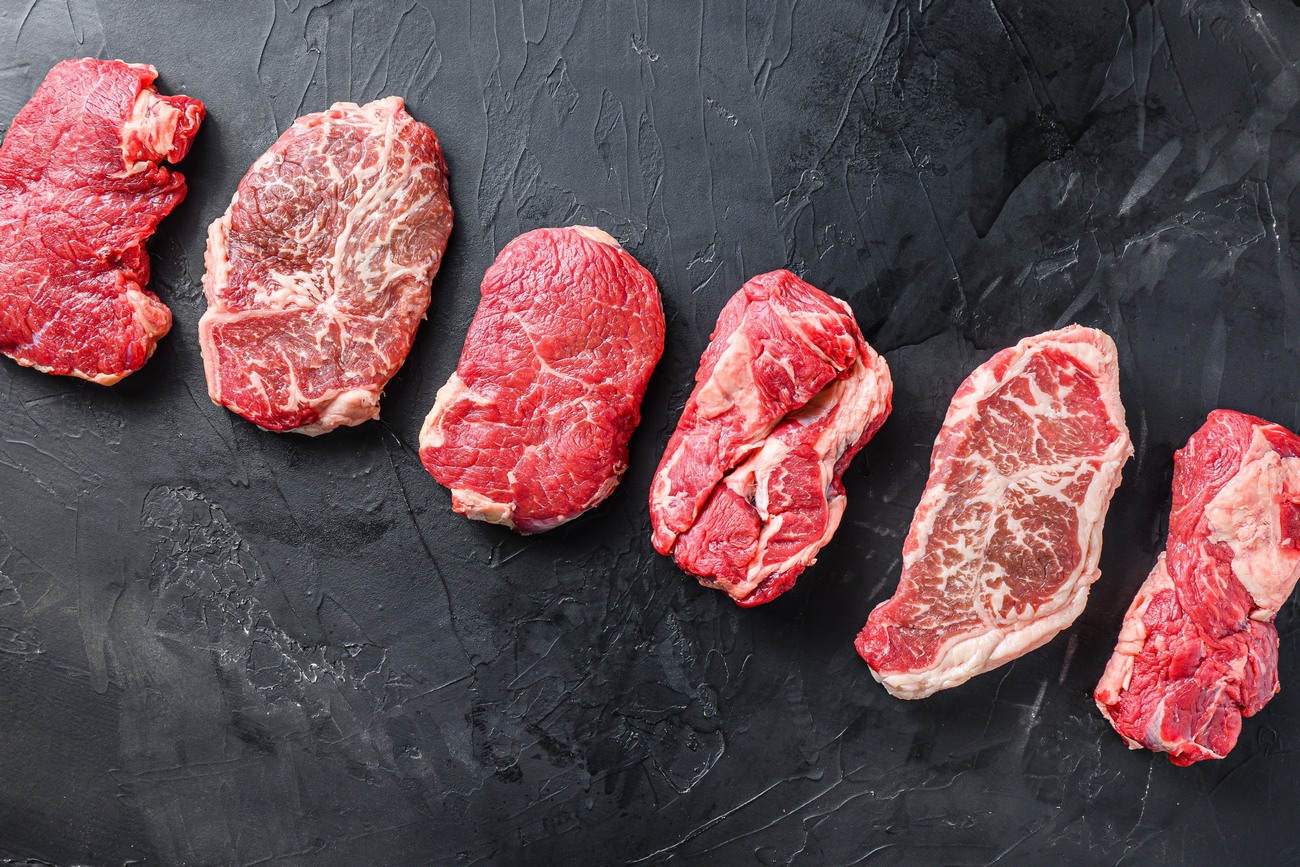
This point is both an advantage and a drawback. People who have tasted lab samples note that the main difference lies in the fact that lab-grown products lack the familiar shapes (wing, leg, thigh) and the rich taste of traditional meat. A classic steak has a unique structure besides protein and fat, including blood, veins, sometimes cartilage, and bones. All of these elements are absent in synthetic prototypes.
Chemical composition, nutrition
As of the beginning of 2024, cultivated meat significantly lags behind in nutrition and chemical composition compared to traditional samples. This issue is being addressed, and optimal solutions will be proposed to ensure that consuming such products has no adverse effects on health and that the human body receives all necessary micronutrients, vitamins, and minerals.
Resources, energy consumption
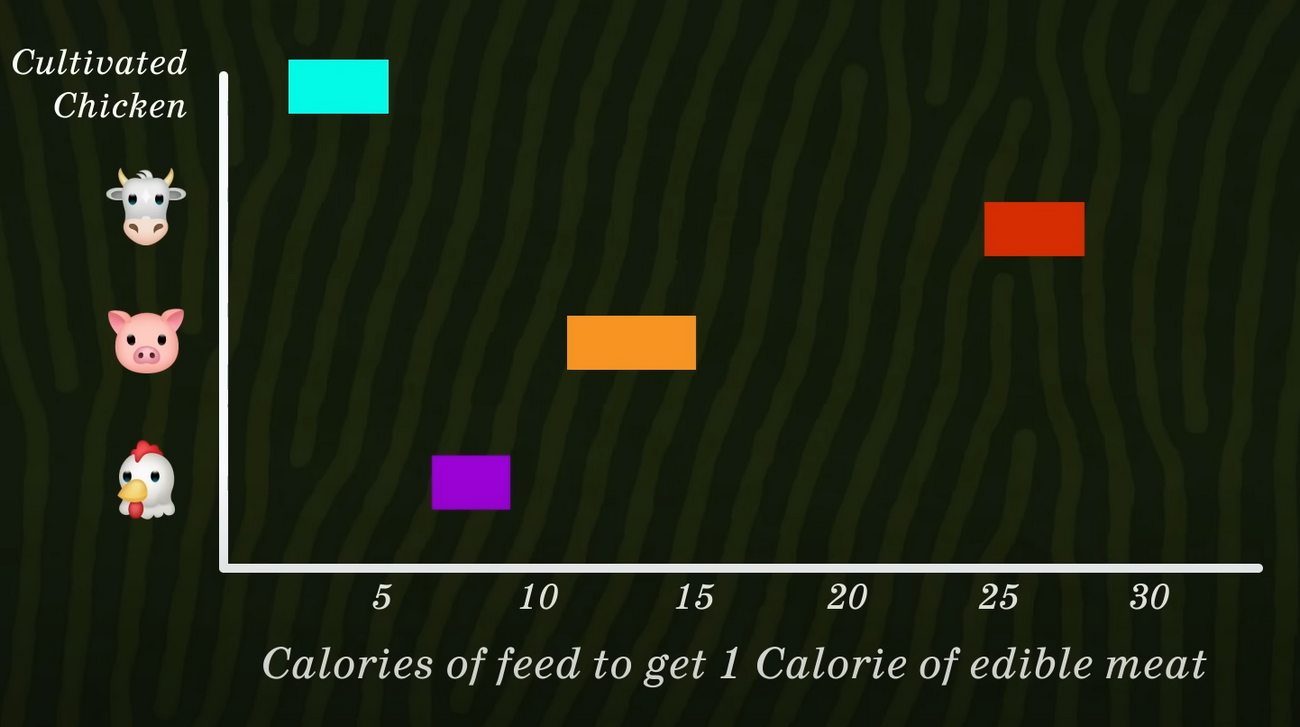
According to the latest data (early 2024), the production of vat-grown meat still consumes a considerable amount of electricity and water. While it involves fewer human resources and less space, the high costs of cultivating lab-grown animal muscles directly impact the formation of the final product’s price. Currently, it remains too high compared to regular meat.
Ethical, cultural, religious factors
Not everyone is fond of the technology itself (cell multiplication, bioengineering, cultivation), and some simply don’t trust the manufacturers. Even with a lower price, there will be people who prefer traditional pork, chicken, or beef over cell-based meat. These issues will arise based on religious, personal, ethical, ethnic, or cultural beliefs.
Health safety, distribution
Currently (early 2024), lab-grown meat is allowed for sale in just two countries worldwide (Singapore, USA). This hinders the overall development of the technology but also indicates that people continue to view the safety of this product with suspicion. Until a series of studies and experiments are conducted, until it is proven that meat grown in a lab is safe to consume and does not harm health, consumers will continue to prefer standard meat and remain skeptical about lab offerings.
As you can see, there are plenty of challenges, but the popularity of bioengineered meat is steadily increasing. The number of people eagerly awaiting approval for selling (buying) is very high, anticipating a significant food revolution in the coming years.

When was the first artificial meat made?
The initial validation of the lab-grown meat concept was conducted in 2002 by Dr. Mark Post, a professor of physiology at Maastricht University in the Netherlands. Dr. Post used cow cells to create a small piece of muscle tissue, which he described as “cultured beef”.
When was artificial meat first tasted?
It took place at 13:00 UK time on August 5, 2013, in London. That was the moment when Professor Mark Post from Maastricht University unveiled the world’s inaugural lab-grown beef hamburger.
The production cost of the meat for this dish was around $300,000, and the growth process spanned two years.
This groundbreaking meat creation, cultivated in a laboratory setting, marked a pivotal proof of concept for synthetic farming methods.
Approximately 200 journalists and scientists attended the event. The cultured beef burger was prepared, tasted, and documented live, as showcased in the video we offer below.
The renowned first hamburger crafted from vat-grown meat comprised around 20,000 muscle fibers, meticulously cultivated in Mark Post’s laboratory. The burger was crafted with a touch of powdered egg, breadcrumbs, and a few other commonplace burger ingredients.
Tasting the creation were Mark Post, food writer Josh Schonwald, and nutritionist Hanni Ruetzler. The burger itself was expertly prepared by chef Richard McGown of Couch’s Great House in Cornwall:
Video of this iconic event:
Where can I buy laboratory meat?
As of the beginning of 2024, cultured meat is officially allowed in only two countries: Singapore and USA. But the pace that this industry is gaining, number of supporters, approved documents at the highest level allows us to look optimistically into the future and boldly say that lab-grown meat will be available all over the world in the next 10 years.
Read a separate article on the distribution and approval of cultured meat in different countries on our website.
Where can I try laboratory meat?
Manufacturing companies frequently organize tasting events as their products need to be sampled by consumers. Cultured meat is often featured in these events. The pricing details and whether they offer complimentary samples are currently unknown.
Moving forward, our website editors plan to undertake a dedicated study on the availability of laboratory-grown meat across different countries in Asia, Africa, Europe, the USA, and Australia.
Following this investigation, we will provide a more accurate response regarding specific locations where you can experience the taste of cell-based meat or potentially make a purchase.

Is lab-grown meat available in my area?
If you’re in Singapore or the United States, yes, you can easily and legally purchase a tasty piece of lab-grown meat for around $20 per serving. To do this, you’ll need to pre-book your portion on the establishments’ websites.
For other countries, as of now (early 2024), cultivated meat is not permitted in free trade. However, that doesn’t mean you can’t find it. It is available from companies that produce it and are seeking tasters to improve their production.
In the “Companies” section, you’ll find a list of these businesses that you can contact for tasting. We are confident they will welcome new consumers who want to participate in the industry’s development. Your tasting could contribute to making the product better, and you’ll have the opportunity to be a small part of global progress, bringing us closer to the time when lab-grown meat becomes popular and available for purchase at reasonable prices in your country.
Artificial vs. Traditional
Cultured meat has common features with traditional one, but many people ask questions in which they try to find the difference, dissimilarity, advantages:
- What is the difference between laboratory meat and real meat?
- Is bioengineered meat safer than conventional meat?
- Does slaughter-free meat contain cholesterol and if so, how much?
- Does cultured meat contain saturated fat?
- Is lab-grown meat carcinogenic?
- What chemicals are in clean meat?
- Does vat-grown meat have the same nutritional value as traditional one?
People want to understand whether it is better, how safe it is, whether it is not dangerous to health. And this is right, it is normal, because the typical meat of animals raised on a farm has both its pros and cons.
To put it briefly and without unnecessary words, meat grown in a lab is undeniably better than its traditional “competitor”.
When growing in the laboratory:
- animals do not suffer;
- much less land is used;
- low energy and water costs;
- In vitro meat is perfectly clean and cannot contain parasites, viruses, bacteria, it is safe, unlike traditional one;
- cultured flesh consists of the same components (protein, fat), so it still has cholesterol in its composition, so here we can say – a draw;
- chemicals, GMOs, which can be found in usual meat, are not allowed in the lab-grown examples, because the production takes place in a controlled and often sterile environment.
As a result, bioengineered meat has a huge advantage over standard one, it solves almost all the problems created by traditional farming of livestock, poultry, and fishing on an industrial scale.
We will tell in more detail about the differences between these two types of meat in a separate article on our website.

Ethical concerns with cultured meat
From the very beginning of research and production of lab-grown meat, there have been potential buyers who constantly harbor doubts and conflicting facts, thoughts, and theories regarding the nature of the product’s origin, its quality, its impact on the body, and so on. This group of people is in a constant state of tension, searching everywhere for pitfalls to discredit lab-grown meat in the eyes of others.
One of the most popular topics among opponents of clean meat production and approval is its manufacturing methods and ethical issues. On the one hand, the large-scale creation of lab-grown meat addresses many ethical concerns associated with traditional farming and the meat market. On the other hand, it raises new questions.
For instance, people are concerned about whether lab-grown meat will truly be produced without involving animals and their suffering. Some companies openly admit to using fetal bovine serum in the technological process, which directly relates to animals, their lives, and their suffering.
Companies that have reached a new technological level and arranged their production in a way that doesn’t require a large amount of calf serum have taken a big step towards gaining the trust of skeptical consumers, but this is only part of the whole picture. There are other grievances as well. For example, people are displeased that they are offered essentially synthetic food, and they openly and predictably worry about it.
Biofabricated food has associations with plastic, rubber—overtly synthetic products. People see danger in these lab-grown flesh samples; they don’t want to believe that it’s natural and won’t harm their health. Even significant arguments and substantial evidence won’t have a big impact on this layer of people because they fundamentally disagree with this direction; they don’t see themselves as consumers of these technological solutions.
In short, ethical questions and problems regarding lab-grown meat will persist as long as in vitro animal flesh exists because the production process raises doubts among even the most discerning beef enthusiasts:
- Is lab-grown meat really produced without animal suffering?
- Does the actual production of cultured meat occur without using fetal bovine serum?
- Is cell-based meat considered a halal product?
- Does lab-grown meat contain real blood?
- Can slaughter-free meat truly be considered halal or kosher?
We address these and many other questions on our website, so look for information in the relevant sections or use the search function.
Meat growing enterprises, Cultured meat companies
There is a rising wave of individuals eager to participate in lab сultivated meat production. Mentions of clean meat products are becoming more widespread, drawing increased interest and investment from people looking to contribute and reap rewards. Consequently, the market is expanding, giving rise to startups, and technology is in a constant state of enhancement. The competitive landscape adds significant momentum and urgency.
As of the end of 2023, there were approximately 160 cultured meat companies worldwide, with a combined investment fund reaching 2.6 billion dollars.
On this page, we will highlight several companies that have earned trust, have already made significant contributions to the healthy meat production industry, and continue to gain recognition and popularity in the news:

Memphis Meats or UPSIDE Foods – is a California-based company that develops cultured meat products. They have successfully produced lab-grown meatballs, chicken and duck, among other meat alternatives.

Mosa Meat, based in the Netherlands, is famous for producing the world’s first cultured meat hamburger. They are actively working on improving the technology to bring lab-grown meat to market.

Aleph Farms – an Israeli company, focuses on the cultivation of cellular meat products, with the main emphasis on beef. They aim to create flesh that tastes, texture and structure closely resembles traditional one.

Believer Meats, based in Israel, develops and sells synthetic meat. They developed their own platform for the large-scale production and demonstrated the ability to produce different in vitro meat types.

BlueNalu, based in the United States, specializes in cell aquaculture for the production of cultured seafood. They are working to create a cellular alternative to fish and seafood to address sustainability and food security issues.

Shiok Meats, a Singapore-based company, specializes in the development and production of seafood products, including shrimp and mussels, utilizing the laboratory cage culture method. This process involves cultivating the soft tissues of marine organisms without resorting to fishing and without causing harm to marine ecosystems.
The core concept behind Shiok Meats is to mitigate the adverse environmental impact associated with the growing demand for seafood. Through cage farming techniques, Shiok Meats can generate delicious and consumable proteins from marine organisms without negatively affecting natural animal populations.
For a comprehensive list of companies engaged in the production, distribution, and promotion of lab-grown meat, please refer to the corresponding section on our website. Additionally, we will provide a separate page where we delve into greater detail about the standout startups in the contemporary market of lab-grown animal products.

Steakholder Foods is an innovative company that goes beyond traditional production methods by incorporating 3D printing technology to create edible meat products. Their unique approach allows customers to receive a cell-based steak within 15-20 minutes of ordering, with the added convenience of specifying the desired fat percentage.
Driven by a mission to make real meat sustainable, delicious, and clean, Steakholder Foods emerged from a profound connection to a cherished culinary tradition and a commitment to passing it on in an environmentally responsible manner. The company seamlessly integrates advanced biology with state-of-the-art 3D bioprinting technology to craft whole cuts of authentic meat. Recognizing that the most talented individuals are drawn to the most challenging endeavors, Steakholder Foods inspires its team with the mission to revolutionize the sustainability of lab-grown meat production.
FDA regulation of cultured meat
The U.S. Food and Drug Administration (FDA) is a federal agency within the United States Department of Health and Human Services. It is responsible for ensuring the safety, efficacy, and security of various products that are sold to the public, including foods, drugs, medical devices, cosmetics, tobacco products, and more.
The FDA’s primary goal is to protect and promote public health by regulating and supervising these products throughout their lifecycle, from development to post-market monitoring.
Key functions and responsibilities of the FDA
The following are the main areas of activity:
- Regulatory Approval and Oversight.
- Food Safety.
- Drug Safety and Monitoring.
- Medical Device Regulation.
- Biological Products.
- Tobacco Regulation.
- Cosmetic Safety.
- Regulation of New Technologies.
- Public Health Education.
- Enforcement.
Unsurprisingly, lab-grown meat falls under the scrutiny of the FDA and must undergo approval for official sale, consumption, and unrestricted production in the United States.
For an extended period, the FDA viewed cultured meat as a product lacking a comprehensive set of indicators deemed safe for human consumption. It wasn’t until 2023 that a historic event unfolded – the production and sale of cell-based meat were officially permitted on U.S. soil! While this marks just the initial phase, it signifies a momentous and revolutionary step forward.
What names does the lab-grown meat one have?
Certainly, to provide a clearer distinction from plant-based products and traditional animal farming, lab-grown meat is often referred to using alternative names. Some common terms include:
- artificial;
- synthetic;
- in vitro meat;
- cell cultured meat;
- bioengineered;
- meat grown in a lab;
- cell-based;
- biofabricated;
- lab сultivated meat;
- cultivated;
- healthy;
- cruelty-free
- slaughter-free meat;
- vat-grown;
- clean.
As you can observe, this intriguing product may be referred to in various ways, but the essence remains consistent: we are discussing the same type of meat, which hasn’t been produced through traditional methods (on an animal, bird, or fish) but rather outside the organism, in a laboratory, under specific conditions that stimulate the replication of muscle cells, forming the foundation for the cultivation of cultured meat.
It is crucial to reiterate that lab-grown meat is unrelated to the products typically consumed by vegetarians. Vegetarians commonly designate plant-based alternatives as a food source, utilizing vegetable proteins derived from legumes, soybeans, and other ingredients in lieu of conventional meat.
Vegetarians opt for plant-based meat substitutes – this accurately describes that product. It’s essential not to conflate these two entirely distinct “meats”.
Resume
In conclusion, the aim of this article is to provide the user, our site visitor, with a comprehensive overview of the phenomenon in the food industry known as “lab-grown meat,” and I am confident we have achieved that goal. We have delved into numerous crucial and foundational topics that will be explored in greater detail in subsequent materials on this website.
Cultured meat is steadily gaining popularity each year, with more and more countries approving the sale of this product. There is a possibility that this protein source may soon become so mainstream that it ceases to be perceived as something peculiar or unusual. It is poised to become an integral part of our diet, occupying a significant place in the meat industry and contributing positively to sustainable farming, ecology, and our attitudes towards animals.
Anyone who has diligently read this entire article titled “Lab-Grown Meat: All You Should Know About It” can consider themselves well-versed in artificial meat compared to the average inhabitant of our planet.
Stay tuned for our updates, as many more useful and interesting materials about clean meat and the food industry will be featured on this website. Expect news, articles, interviews, podcasts, photo galleries, video, reports, special investigations, and more.
🍗 Join us as we navigate the world of cultured meat! 🍗

❓ FAQ. Popular questions people ask about lab-grown meat
To reinforce knowledge about lab-grown meat, we have included a dedicated FAQ section, addressing popular questions and providing answers.
Is Cultured Meat Vegetarian?
✔️ It depends on what specifically motivates a particular vegetarian: whether it’s a desire to avoid contributing to animal suffering or a complete rejection of meat consumption due to the belief that it is detrimental to health.
Lab-grown meat doesn’t harm animals, as it doesn’t involve killing or multiplying their suffering, allowing vegetarians to consume it without ethical concerns.
However, it remains real meat because it contains the same protein, muscle cells, tissues, and fat. Therefore, if someone who identifies as a vegetarian or vegan avoids all forms of meat due to considering it harmful, then lab-grown meat is also prohibited for them.
Is cultured meat healthy and safe?
✔️ The safety of lab-grown meat has been repeatedly demonstrated through numerous tastings and research studies. While the time frame might not be extensive, the product itself is thoroughly examined – a sterile combination of muscle cells, fat, and water. Cultured meat samples contain nothing superfluous, dangerous, or suspicious. On a chemical level, it is the same flesh as if obtained from conventional livestock, poultry, or fish.
The approval for production and sale in the United States, signifying that all necessary FDA investigations have been conducted, speaks volumes about its safety. There is no reason for concern.
Can lab-grown meat cause cancer?
✔️ Lab-grown meat can potentially contribute to the development of cancer, much like traditional one. However, this likelihood is not because it is lab-сultivated; rather, any product, including meat, under certain conditions and circumstances, can become a contributing factor and lead to the onset of cancer.
Currently, there is no basis to believe that lab-grown meat is one of the causes of cancer in humans.
Is cultured meat better for the environment?
✔️ Yes, laboratory cell-based production indeed requires significantly less space and water, eliminates the need for feed, animal care, and human resources for slaughter and maintenance. In the long term, scaling up production will allow for substantial cost reduction and achieve phenomenal efficiency levels, automatically addressing concerns about environmental impact. Traditional methods will lag far behind, eventually transforming into archaic and inefficient practices.
Does cultured meat hurt animals?
✔️ No, animals do not suffer in the production of lab-grown meat. With the invention of cultivation methods that don’t involve fetal bovine serum, the process of growing meat in the lab has become entirely humane and free from any violence towards animals. The collection of the initial set of cells is a painless procedure.
What does cultured meat taste like?
✔️ Countless tastings, widely available to the public through videos, articles, and reviews, demonstrate the lack of significant differences between in vitro and traditional meat. While replicating a steak with its unique combination of marbling, bones, and fat may not be possible yet, nuggets and burger patties taste just as good as conventional ones. The difference is virtually nonexistent.
Will lab-grown meat be cheaper?
✔️ Certainly. Over the past few years, the biofabricated meat cultivation process has undergone significant changes. The production cost of clean meat is consistently decreasing. If, at the beginning of 2024, the price is approximately $20 per kilogram, a forecast suggests a market value reduction to $5-6 within the next 5 years. It’s just a matter of waiting and seizing the opportunity to assist companies in the cultured meat industry as they grow and refine their cultivation methods.
Who invented cultured meat?
✔️ In the 1950s, Dutch researcher Willem van Eelen independently came up with the idea for cultured meat.
✔️ In vitro cultivation of muscle fibers was first performed successfully in 1971 when pathologist Russel Ross cultured guinea-pig aorta.
✔️ In 1991, Jon F. Vein secured patent US 6835390 for the production of tissue-engineered meat for human consumption, wherein muscle and fat would be grown in an integrated fashion to create food products.
✔️ The father of cultured meat is Willem Frederik van Eelen (4 July 1923 – 24 February 2015), a Dutch researcher and businessperson, who pioneered the creation and development of cultured meat.

- GOOD Meat - December 22, 2023
- Landmark Approval: Lab-Grown Meat Sales Greenlit in the USA for the First Time - December 22, 2023
- Eat Just, Inc (JUST Egg) - December 21, 2023